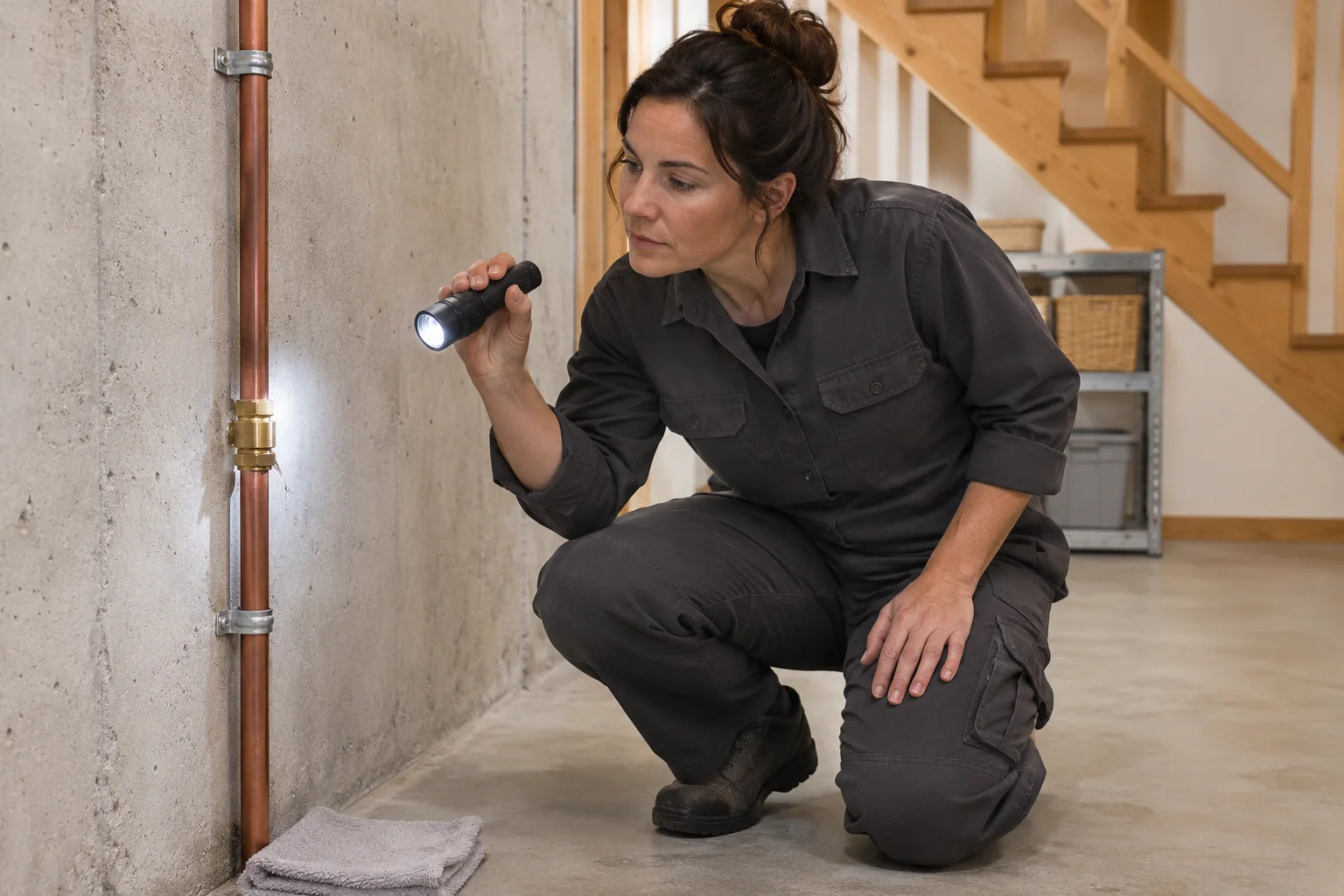
After the repair
Monitor the area without reopening the plumbing
Identify the areas that were wet and watch how they change after the work. If a new droplet appears, a stain expands or water returns during use, contact us again and describe the circumstances. Avoid closing a cavity while materials remain wet. Correcting the source and drying the building address different needs, and the completion of one does not establish the completion of the other.
Keep shutoffs accessible, look at flexible connectors when cleaning and report corrosion or recurring moisture marks. A visual check cannot guarantee the condition of hidden pipes. It can still help you notice a change early and provide useful information when arranging service. If a valve becomes difficult to operate, discuss it during a planned visit rather than forcing it during an emergency.
Questions about water leaks
The leak stopped. Should I still call?
Yes, if the cause remains unknown or there is visible damage. An intermittent leak may return when a fixture is used. Describe what happened beforehand and avoid recreating the problem just to show it. The appointment can be planned around the symptoms, current risk and access needed to investigate. Our guide to safe first steps for a water leak offers additional preparation.
Should I open the ceiling before the visit?
Not automatically. An opening in the wrong place may cause additional damage without revealing the source. Explain the layout and let the assessment determine useful access. Stay clear of a distorted ceiling and do not puncture a swollen surface to drain it.
Can a tenant request help?
Notify the owner or property manager immediately and call to describe the urgency. Explain who can authorize the work and provide access. A leak affecting another apartment or a shared area requires prompt coordination between the responsible people, alongside any immediate steps needed to protect occupants.