Skip to content

Licensed plumbing contractor · RBQ 5688-9025-01

Emergency service available 24/7

Plomberie LaSalle

Cold weather · Interrupted flow · Damaged pipes

Frozen pipe repair and burst pipes

No running water after a cold night? A pipe starts leaking as temperatures rise? Plomberie LaSalle helps you arrange an assessment of suspected freezing and the work your installation needs.

Plomberie LaSalle serves the approved areas of Montréal, the West Island, Laval, the North Shore and the South Shore. Give us the building’s address by phone to confirm availability and prepare the intervention for your area.

Call 514 312-3198 and explain what has changed. Urgent calls are accepted 24 hours a day; availability and service conditions are confirmed by phone. Mention an active leak or a building without water at the beginning of the call.

9286-5419 Québec inc. · RBQ 5688-9025-01

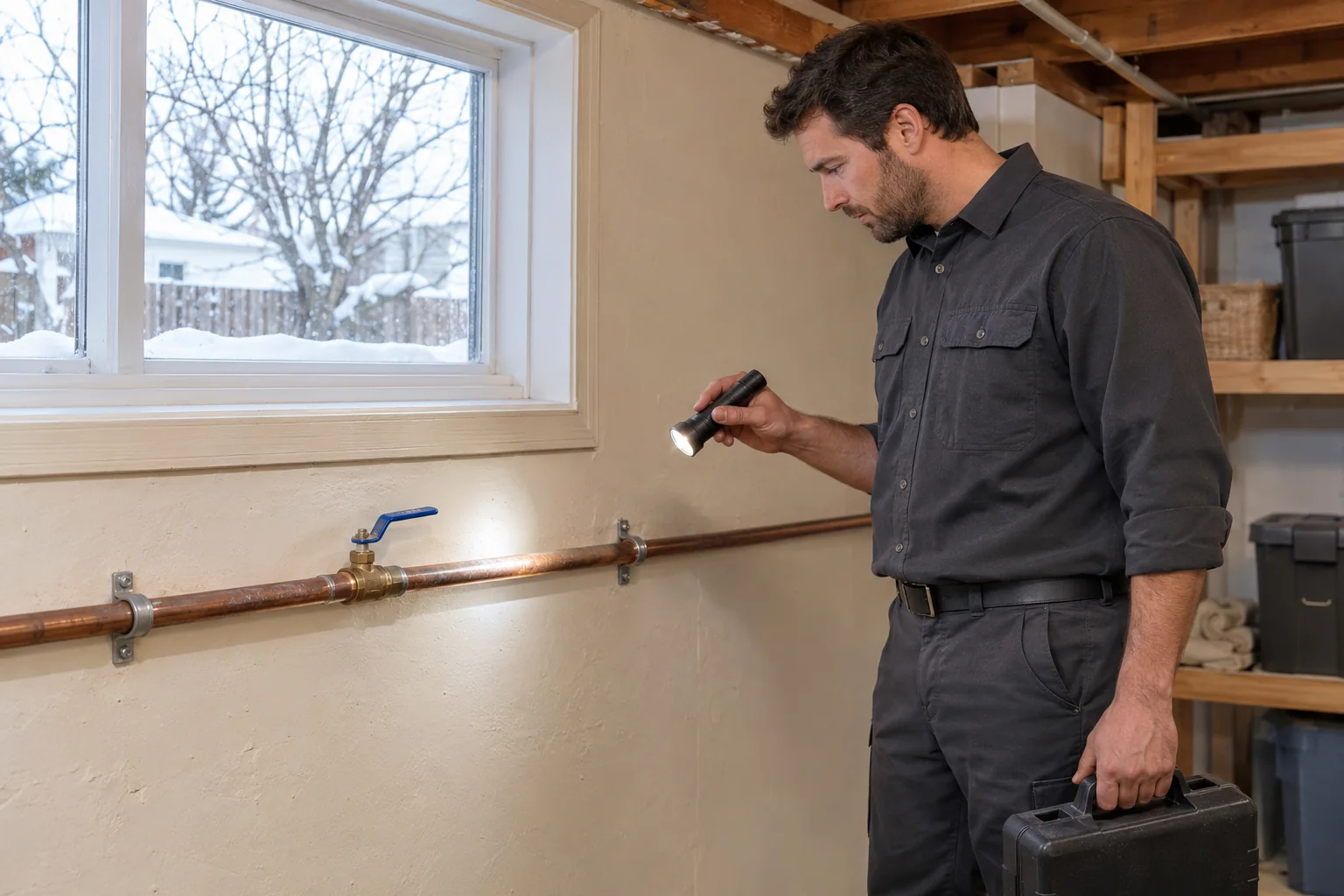
Assessment of plumbing exposed to cold during winter in LaSalle

Start with the symptoms

No running water or a leak after freezing?

A frozen pipe may cause a trickle at a faucet, leave one fixture without water or interrupt a larger part of the building’s supply. These symptoms alone do not confirm freezing. A closed valve, a municipal interruption or another plumbing fault can also stop the water. Explain which fixtures are affected and when you first noticed the change.

If you already know how the affected faucets behave, mention whether the issue involves cold water, hot water or both. Tell us whether another unit still has water and whether you received an interruption notice. Avoid repeated tests when a pipe looks cracked or water is appearing inside a wall. Useful observations should not require you to recreate water damage.

Three situations, different decisions

Arrange the right assessment

Before deciding on frozen pipe thawing, the extent of the interruption needs to be understood. The first call prepares that assessment; it cannot guarantee a particular technique remotely. An exposed pipe behind a cabinet presents different constraints from a line concealed in a wall or a buried water service connection.

Only one area has lost water

A branch near an outside wall or inside an inadequately heated space may be involved. Mention drafts, a heating failure and recent work in that area. Do not dismantle a fixture to look for ice. These details can help direct the inspection without creating another leak or disturbing a connection that was still intact.

The whole building is affected

A complete interruption calls for considering the building’s incoming supply and the public network. Montréal provides a frozen pipe reporting process and assessment through 311 when public piping may be involved. No water anywhere is a useful clue; it does not establish the precise location or responsibility by itself.

Water returns with a leak

Restored flow can reveal a crack previously concealed by ice. Explain where the water appears and whether the supply has been closed. Controlling the release and assessing the damaged line become the immediate plumbing priorities. The return of water is not proof that every part of the pipe has survived the freeze.

Work based on the actual access

Have the pipe assessed before applying heat

The assessment considers the suspected frozen area, visible materials, available shutoffs and access limitations. Nearby components and possible damage also matter. When the pipe disappears inside a wall, a targeted opening may be needed to reach it and observe its condition. Discuss that access before work begins rather than assuming that thawing will require no opening.

The thawing method depends on the installation. Ask which section will be treated, how it will be monitored and what happens if a leak develops. One method cannot automatically suit every material and location. A hidden or deteriorated pipe may need a different approach from an accessible length that can be observed throughout the work.

Never use an open flame to thaw a pipe. Keep electrical equipment away from water and avoid heating a cavity you cannot inspect. If safe access is uncertain, leave the area undisturbed and describe the limitation during the call. Improvised heating can add a fire or electrical hazard to an interruption that already needs attention.

A split pipe or a localized crack

Burst pipe repair and the return to service

The repair may involve a connection or a damaged length of pipe. Its scope depends on the material, the affected area, the condition of adjacent sections and the room needed to make suitable connections. Tape or an improvised patch does not establish that a pressurized pipe has received a lasting repair. Explain any temporary measure already applied.

If several areas froze, ask how they will be assessed and why a longer replacement is being proposed. The recommendation should distinguish observed damage from remaining uncertainty. A localized incident does not automatically require replacing all the plumbing, but it also does not justify keeping a visibly damaged section in service simply because it has stopped dripping.

For a leak unrelated to freezing, see our water leak repair service. A problem around the incoming supply may instead require a water service line assessment. Municipal equipment can involve additional coordination beyond work on an indoor branch.

  1. Clarify access and scope

    Identify the section involved, required shutoffs and proposed openings. Ask who handles wall or ceiling finishes and which tasks are included in the plumbing work. This helps separate access from the completed repair.

  2. Work with the condition found

    Thawing or replacement is adapted to the pipe. If an unexpected condition changes the proposal, ask how it affects the scope and cost before additional work proceeds. Keep the explanation with your service documents.

  3. Restore water and explain monitoring

    Appropriate tests allow observation of flow and accessible connections. Ask which signs require another call and whether any follow-up checks remain. Concealed areas and wet building materials may require separate attention after the plumbing visit.

Duplexes, condominiums and commercial premises

Closing the water can affect other occupants. Tell us who can authorize work, open shared spaces and contact the people concerned. In a rental property, notify the owner or manager promptly. Record the affected units and the responsible person’s contact details rather than assuming that each unit has a separate shutoff.

For a business, explain which essential fixtures have lost water and whether a planned shutdown is possible. Access to the mechanical room, someone’s availability on site and operating constraints should be known before the visit is arranged. Availability is confirmed for the actual situation; the same response time cannot be promised for every property or interruption.

Understand the proposal

What affects the cost of frozen pipe repair?

Assessment time, access to the pipe and the ability to isolate the water affect the work. Materials, available parts, the replacement length and testing also matter. An urgent visit may have different service conditions from a planned appointment. Describe the symptoms so the useful conditions and next steps can be discussed before someone travels to the property.

Ask whether the proposal includes assessment, thawing, materials and labour or whether some stages will be priced after inspection. Openings, drying and finishing should be identified separately. A photograph cannot reveal the condition of an entire concealed line or provide a reliable price for every possible situation. Clarify how additional findings will be presented for your decision.

If the same line freezes every winter, discuss corrective options as well. Repeated thawing without examining cold exposure can leave the underlying problem unresolved. Rerouting requires its own assessment, and insulation alone does not replace adequate heat in a cold space. The immediate service and longer-term correction should have clearly stated scopes.

After the visit

Reduce the pipe’s exposure to cold

Ask which sections were affected and what may explain their cooling. Keep shutoffs accessible and have vulnerable pipe routes assessed. Corrective work needs to consider heating and air circulation, the building envelope and nearby installations. Avoid closing a damp cavity before its condition has been evaluated. Water damage can remain after the damaged pipe has been repaired.

Before a winter absence, arrange property checks and confirm any relevant requirements directly with your insurer. Prevention needs to suit the building and its equipment. An alert system can identify a change, but it does not replace someone able to respond when heat fails or water starts escaping. Keep the contact and access arrangements practical for the person checking the property.

Questions about frozen and burst pipes

Water is flowing again. Should I keep the appointment?

Explain the change before cancelling. A distorted pipe, new moisture or repeated freezing still warrants assessment. Restored flow does not prove that concealed lengths are intact. Report any leak that appears during warmer weather, including a small drip that was absent while the water was blocked.

Should I open the wall before the visit?

Not automatically. An opening should follow the available clues and useful access. Explain the known pipe route and affected surfaces. Do not open an area near electrical installations or beneath a damaged ceiling simply to search for the pipe. Unnecessary access can add work without identifying the fault.

Does thawing include repair and finishing?

Confirm each task. Thawing aims to restore circulation; a split pipe needs additional repair. Drying, finishing materials and painting may involve separate work. Clarify those boundaries before the intervention so you understand what will be restored and what still needs to be arranged afterward.

Customer reviews

Experiences shared with Plomberie LaSalle

Prepare the next step

A frozen or burst pipe? Tell us what is happening.

For frozen pipe repair in your service area, call and explain whether water has stopped, slowed to a trickle or started escaping from a line. These details help prepare the assessment and confirm availability. An active leak should be reported by phone so its current risks can be explained promptly.