
Repair · installation · maintenance
Sump pump repair and installation
A pump that will not start, a rising sump basin or a motor that runs continuously deserves prompt attention. Plomberie LaSalle assesses the system and recommends sump pump repair, replacement or installation based on the actual cause of the problem.
We receive requests across Montréal, the West Island, Laval, the North Shore and the South Shore, within our service areas. Give us your address so we can confirm availability and timing for your property.
514 312-3198 — Tell us what is happening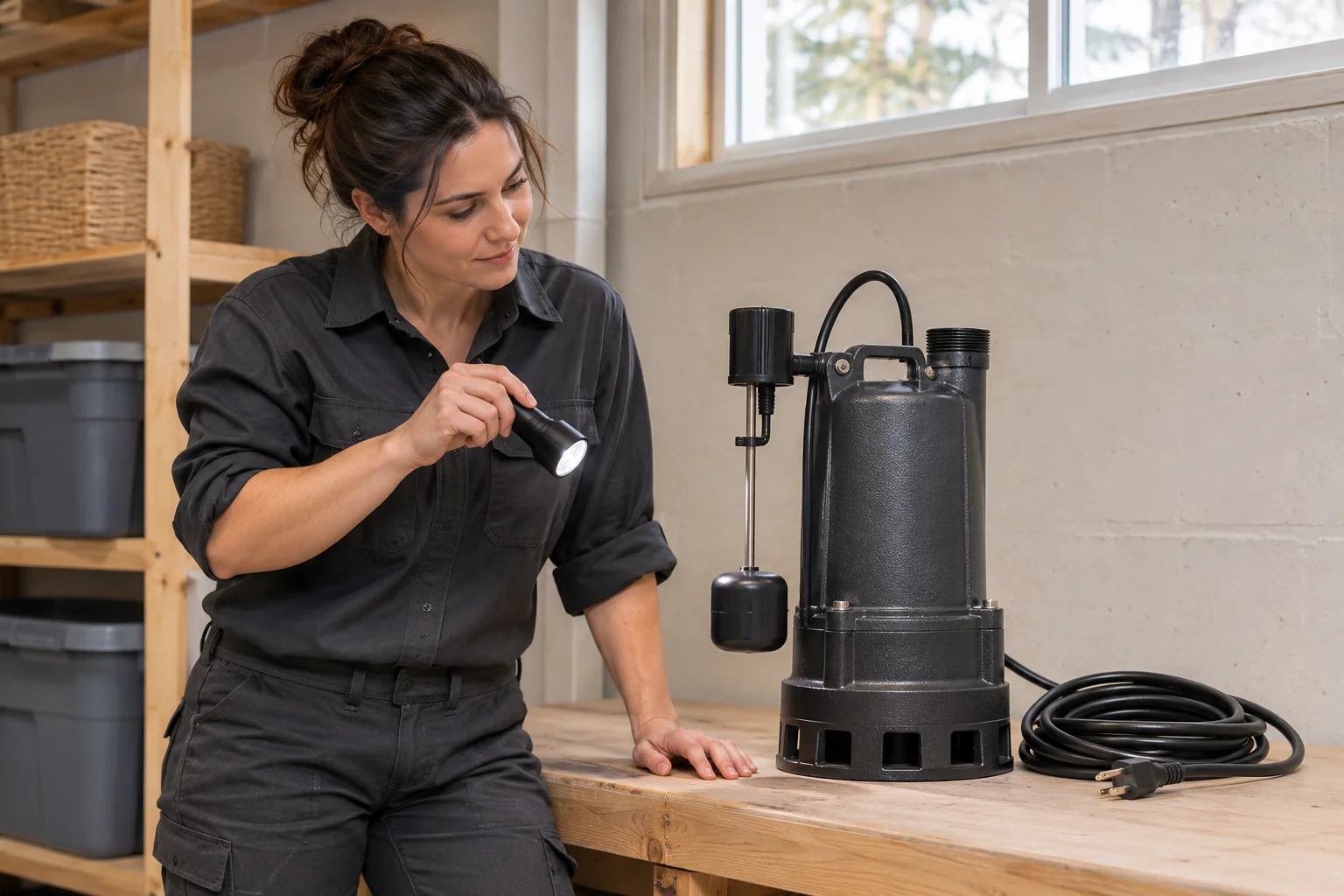
Rising water? Put safety first
Tell us whether water is approaching the top of the basin, an alarm is sounding or the problem follows heavy rain, snowmelt or a power outage. An unusually high level may result from a pump failure, a switch problem, a restricted discharge or incoming water beyond the system’s capacity. Each situation requires a different response.
Do not enter a flooded area to unplug a pump or reset a breaker. If water may be touching electrical equipment, stay clear and follow Hydro-Québec’s flooding safety instructions. Call 911 for immediate danger. Plumbing work does not replace the steps needed to make electrical conditions safe.
Repair the pump or correct the system?
A sump pump removes water collected in its basin through a discharge pipe. Its performance depends on the complete path: incoming water, usable basin volume, float movement, actual pumping capacity and discharge destination. Replacing the motor without considering that path can leave the cause of an overflow unresolved.
We review the symptoms before recommending a part. A trapped float, leaking connection or faulty discharge check valve may explain abnormal behaviour. A damaged impeller, extensive wear or repeated failures may instead support replacement. The condition of the whole unit and the availability of suitable parts matter alongside the immediate symptom.
Recognize the warning signs
Very frequent starts can indicate limited usable basin volume or water flowing back after shutdown. Continuous running can reflect heavy inflow, a stuck switch or insufficient capacity. A new noise, vibration or a water level that falls unusually slowly also deserves investigation rather than an assumption that the pump is simply old.
A quiet pump is not necessarily broken: the level may be below its starting point. Conversely, hearing the motor does not prove the unit is delivering enough water. Note what has changed from normal operation without dismantling the pump or changing its controls. Tell us whether the change is recent or has occurred during several storms.
A visit built around your installation
01 / UnderstandIdentify the water source and the system
We discuss previous incidents, weather conditions and recent work, then identify the basin, connections and discharge access. Mention known foundation drains, available plans and basement alterations. Water appearing beside a wall does not automatically come from the sump. Establishing where it enters helps determine whether pump work can address the problem.
02 / CheckAssess the pump, switch and discharge
We examine accessible components, connections, obstructions and system behaviour when conditions permit a safe test. We explain the limits of what can be observed, including inaccessible buried piping or a storm inflow that cannot be reproduced during the visit. Further investigation may be needed before the full cause is known.
03 / DecideAgree on the work and completion checks
We explain the proposed repair or equipment, required changes and exclusions. Following the work, checks cover starting, stopping, water movement and connections under the available conditions. You receive operating and maintenance guidance and know which warning signs to watch. A successful test cannot guarantee protection from every future flooding event.
Select a pump for the building
Horsepower alone is not enough to choose a pump. Available flow changes with the lift height and resistance in the discharge line. Pipe diameter, length, elbows and the discharge destination must be considered together with basin dimensions. A larger motor may still perform poorly if a restricted pipe or unsuitable discharge arrangement limits the water it can move.
A submersible pump operates within the basin and must be suitable for the intended use. A pedestal model has different space and access requirements. The float needs room to travel without catching the wall, cables or another pump. The lid and maintenance access must remain compatible with the system so future inspection does not require avoidable demolition.
We distinguish a drainage pump from equipment designed for other liquids or solids. The word “submersible” does not identify the application by itself. A sewage ejector system requires an assessment of that particular wastewater network; it should not automatically be treated as a groundwater sump pump request. Describe what connects to the basin when you call.
Replacement and a first installation
For sump pump replacement, we check the proposed unit against the existing basin and piping. Buying the same model is not always the answer if the old arrangement overflowed or cycled constantly. Explain any changes to the property, basement or drainage since installation, and share records showing why the original pump was chosen if you have them.
A first sump pump installation may involve a basin, discharge piping, penetrations or concrete work. The permitted discharge destination and municipal requirements must be checked for the address. Systems differ between municipalities: Dollard-des-Ormeaux describes separate sanitary and storm sewer networks, for example. That local description does not establish which connection is allowed for a property elsewhere.
Plan for an outage with realistic backup capacity
An electrically powered primary pump may stop during a power failure. A battery backup sump pump can be considered according to basin space, expected water flow and discharge requirements. It is a system comprising a compatible pump, battery, charger, controls and discharge arrangement. Connecting a battery to an ordinary pump does not automatically create a suitable backup installation.
Runtime depends on battery condition and capacity, pumping demand and cycle frequency. It is finite, especially when incoming water is heavy. A high-water alarm or remote notification can warn of a problem but does not remove water. Ask how to test the alerts, recognize a battery that needs replacement and arrange a response when the property is unoccupied.
Maintenance and prevention
Keep the basin accessible and prevent debris from falling inside. Have the manufacturer’s maintenance instructions, float movement, connections and discharge conditions reviewed. Schedule attention before periods when the system normally works harder, especially if previous rain or snowmelt exposed a weakness. The appropriate maintenance interval depends on the equipment, usage and surrounding conditions.
Cleaning and testing require electrical and mechanical precautions. Do not pour chemical drain cleaner into the basin. A discharge restricted by ice, vegetation or debris calls for a correction to its cause, without directing water onto neighbouring property or improvising an unauthorized connection. Our guide to preparing for a sump pump inspection helps you collect useful information for the visit.
Cost, limitations and preparing for the work
Cost depends on access, pump type, discharge piping, accessories and the changes required. An accessible repair differs from a project involving a new basin and an opening in the slab. Clarify what is included for concrete, debris removal and restoring finishes. Necessary electrical work must also be identified and handled by the appropriate qualified professional rather than assumed to be part of every pump replacement.
Before the visit, gather invoices, the known equipment age and a short history of flooding. For a rental building or business, identify the person responsible for access and explain occupancy or operating constraints. Use our contact page to prepare a request, or call directly if the water is rising. A single universal price cannot reliably describe all of these installations.
If you are finishing a basement or buying a property, locate the existing sump access before covering floors or building cabinetry. Ask how the pump can be removed for future service and where its discharge goes. Preserve available documentation for the next occupant or building manager. Clear access can make both routine maintenance and urgent troubleshooting easier without changing the pump itself.
Does a sump pump replace a backwater valve?
No. A pump removes water from its basin, while a backwater valve protects a defined part of the drainage network against sewer return. Neither device resolves every possible water entry problem. Our backwater valve and sump pump comparison explains their different roles.
The pump runs, but the basement still gets wet. Why?
Its capacity may be exceeded, the discharge may be restricted or water may be taking a different route. A foundation crack, opening or separate drainage problem needs its own assessment. We distinguish these possibilities before recommending replacement of a pump that may still be functioning correctly.
Can it wait for regular maintenance?
A level that keeps rising, an alarm or a failure during heavy inflow warrants a prompt call. Describe the circumstances so the request can be prioritized. An occasional noise without rising water also deserves attention, but the sound alone does not establish the urgency or the required repair.
What our customers say
Tell us about your sump pump
For repair, replacement or a new installation, describe the building and what the pump is doing. Plomberie LaSalle confirms availability at your address across Montréal, the West Island, Laval, the North Shore and the South Shore, within our service areas.
Call 514 312-3198Explore our plumbing services or return to Plomberie LaSalle.
9286-5419 Québec inc. · RBQ 5688-9025-01