Choose a service based on what you are seeing
A visible leak or recurring damp patch
A puddle under a sink can come from a supply connection, a trap or a fixture seal. Notice whether it appears when you turn on the tap, empty the basin or use a nearby appliance. These details help guide the investigation. However, they do not replace an inspection of the connections and surrounding surfaces.
When requesting water leak repair, mention earlier repairs and any existing access openings. A ceiling stain can appear some distance from the source. Therefore, avoid opening several walls before the assessment. Photos taken safely can help you describe the problem during the initial call.
A slow drain, blocked toilet or sewer backup
A single slow sink suggests a different situation from several fixtures gurgling together. Explain which fixtures are affected and on which floor. If a floor drain backs up when someone flushes a toilet, stop testing the system. The findings may call for drain cleaning, a connection check or a targeted inspection.
Our sewer backup service explains possible next steps. Also disclose any chemical drain cleaner you have already used, including the product name if you know it. Never mix products or attempt to remove a cleanout cap when wastewater may be under pressure behind it.
Hot water and plumbing fixtures
No hot water, a leaking tank and low pressure at one tap do not automatically point to the same fault. First, check whether the cold water works normally. For a water heater, note the capacity and label information only if you can read them safely without moving equipment or touching wiring.
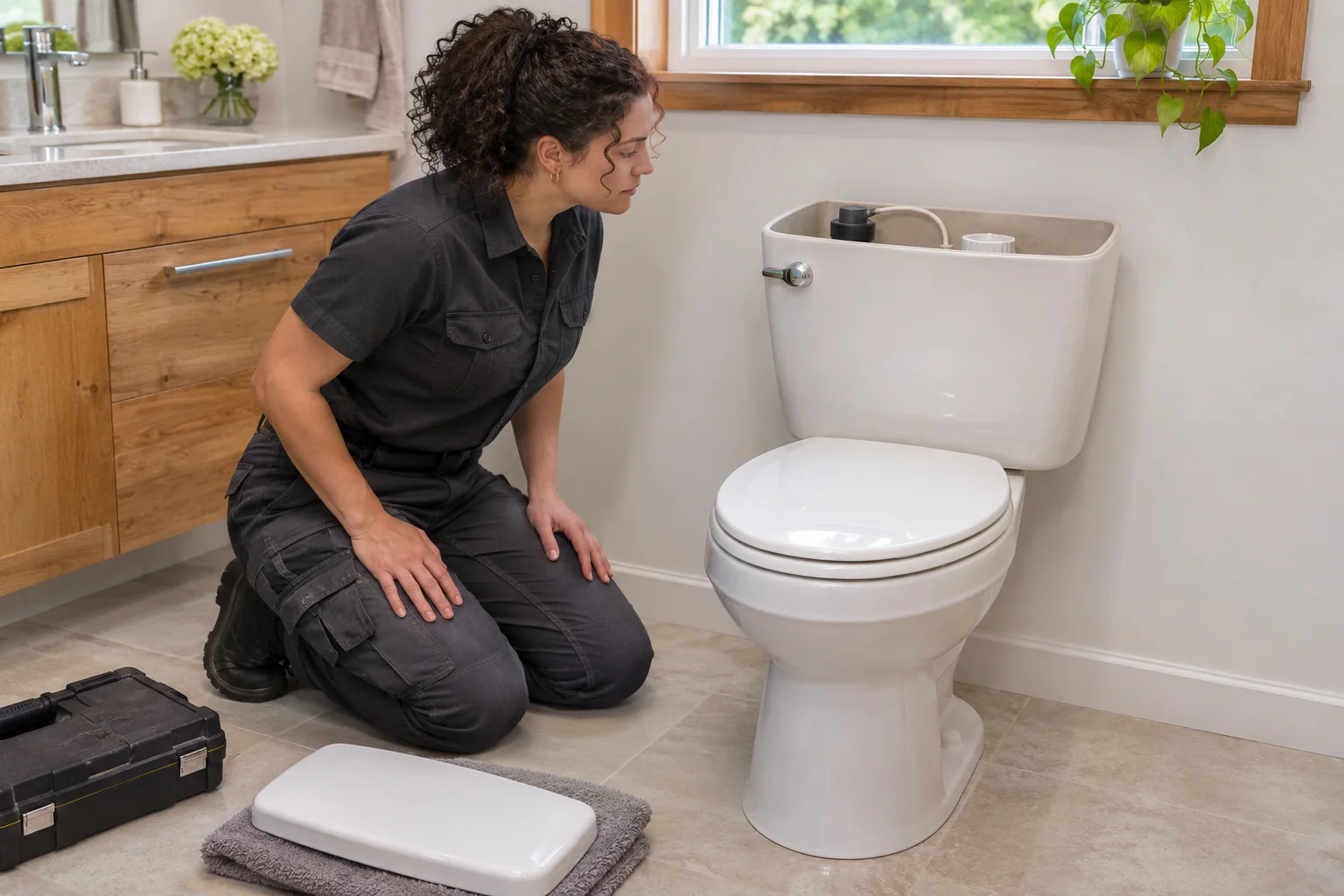
For a toilet, faucet or sink replacement, prepare the dimensions and product reference. A fixture purchased in advance may need connection changes or additional parts. Before booking installation, confirm compatibility, access to the connections and the condition of the shutoff valves. This helps avoid an unnecessary interruption once work begins.