
Plomberie LaSalle · Pipe diagnosis
Drain camera inspection
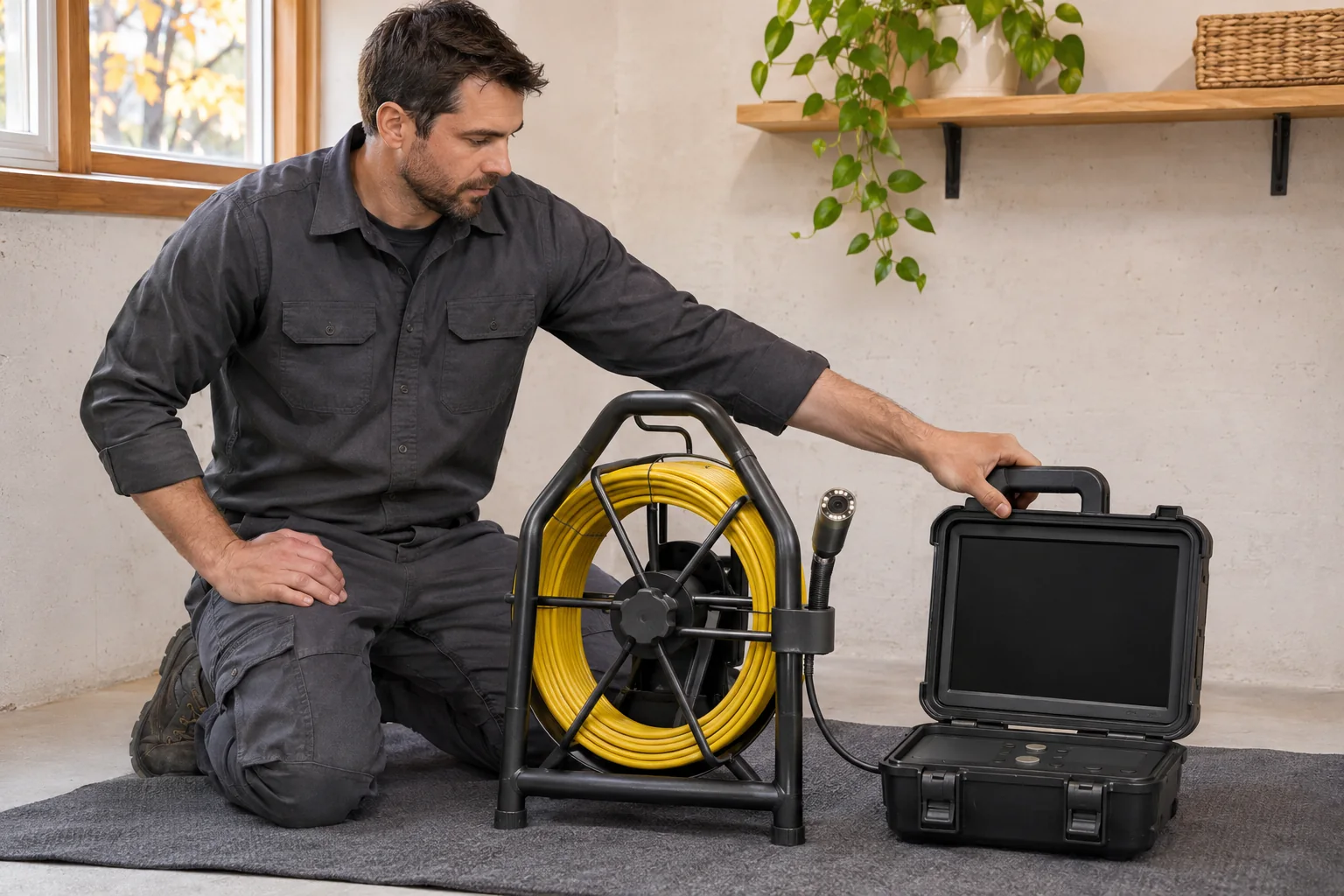
A drain that keeps blocking deserves an explanation. A drain camera inspection examines the accessible inside of the pipe to help identify the problem and decide which work makes sense next.
Plomberie LaSalle takes requests in Montréal, the West Island, Laval and the served sectors of the North Shore and South Shore. Call to confirm availability at your address and explain what you need the inspection to establish.
Discuss your drain · 514 312-3198
9286-5419 Québec inc. · RBQ 5688-9025-01
Understand before deciding
A recurring drain blockage needs a closer look
The drain clears for a few days, then the same gurgling or rising water returns. That pattern calls for a fresh look at the diagnosis. Material may have accumulated again, an obstruction may remain farther along, or the pipe may have a defect. The symptom cannot establish which explanation is right. A camera drain inspection looks for visible evidence in the relevant section rather than automatically blaming roots or a broken sewer line.
Explain whether one fixture drains slowly or several fixtures react together. Share the dates of earlier visits and how long the improvement lasted. An isolated toilet blockage points to different checks from a shower and floor drain backing up at the same time. These details help determine where the camera should enter, which portion should be examined and whether other work needs to happen first.
An inspection can also be discussed before a major repair or to document the visible condition of a sewer connection. If you are buying a property, explain your deadline and required documents before booking. A pipe inspection is a defined service with a defined scope. It does not replace a general building inspection or guarantee that inaccessible sections have no defects.
Three different purposes
Inspection, drain cleaning or pipe repair?
The camera observes
It produces images of the pipe interior under the conditions encountered. Deposits, roots, an offset joint or deformation may be visible. Findings should be explained with their location and limitations. An unclear image calls for further checking rather than a definite conclusion about the entire drainage system.
Cleaning opens the passage
A camera does not remove a blockage. When debris prevents progress or hides the walls, drain cleaning and unclogging may be needed first. Clearing addresses the obstruction; inspection helps explain what remains and examine a section once a usable view is possible.
Repair addresses a defect
A structural problem does not disappear when it is filmed. If the findings point towards repair, the extent of that work, access and options need separate assessment. Video can support the decision without making excavation automatic or establishing every condition that a future repair project will encounter.
Is wastewater coming up right now?
Limit use of the affected fixtures and keep people away from contaminated water. Tell us about the active sewer backup when you call. Assessing the current situation takes priority; planning a camera appointment should not distract from a problem that is getting worse.
A visit with a clear purpose
What happens during a sewer camera inspection?
The sequence depends on the installation and available access. Before work begins, ask which question the inspection is intended to answer: explaining a repeat blockage, checking a cleaned section or preparing documentation for a particular purpose. A clear objective helps keep the work useful to you.
-
Identify access and agree on the scope
The plumber examines accessible entry points and asks about the history of the problem. An accessible cleanout often makes it easier to introduce the equipment. A cleanout concealed behind fixed cabinetry or a deteriorated cap can affect preparation. Do not force a rusted cover or open a pipe under pressure to get ready for the visit.
-
Obtain a usable view
The camera travels through the section that can be reached. Cloudy water, debris or a complete obstruction may seriously limit visibility. The professional may recommend clearing the line or changing the approach. Ask for an explanation of any additional work, why it is necessary and how it affects cost before authorizing it.
-
Interpret the observations
Images need to be considered alongside the symptoms, starting point and distance travelled. You should understand what was actually seen, which portion was inspected and what remains uncertain. A distance displayed on a monitor is not automatically an accurate surface location. Confirm whether separate locating work is necessary and available if your project requires it.
-
Choose the next step
The result may support monitoring, targeted maintenance, further investigation or planning a repair. Ask what evidence supports the recommendation and which changes should prompt another call. Keep the documents provided so that future work can build on the findings instead of starting again without a history of the pipe.
Findings with clear limits
What the camera cannot always confirm
A video inspection shows visible surfaces, not the surrounding soil or every branch of the system. It is not, by itself, a watertightness test. A defect outside the field of view, a submerged section or an impassable bend can leave questions unanswered. A pipe that appears open during the visit may also have an intermittent problem that is not reproduced while the inspection is taking place.
Standing water may need further interpretation. Its presence alone does not establish a precise pipe slope or justify replacement of the whole line. Similarly, material obscuring the view must be distinguished from a confirmed defect in the pipe wall. Ask for a plain explanation of the finding, any additional checks and how those checks would improve the decision.
If the camera cannot complete the planned route, clarify the stopping point and the reason. A partial inspection can still provide useful information, but the unexamined portion should remain clearly identified. Avoid treating a short clear segment as proof that the entire sewer connection is in good condition.
Useful questions when reviewing the images
- Which access point was used as the starting point?
- What length and section were actually examined?
- Is the defect clearly visible or only suspected?
- Why did the camera stop, if it could not proceed?
- Is locating, cleaning or another examination needed?
- Which observations support the recommended solution?
These questions help you compare options using concrete information. They are particularly useful before authorizing work that becomes difficult to change once it has started. You do not need to diagnose the line yourself; you need an explanation you can use.
Documentation you can use
Inspection video and a written sewer report
Do you need a video for a municipal file, a property transaction or another professional? Mention that before the visit. Looking at a live monitor and receiving a recording with a written report are different deliverables. Confirm what will be supplied, in which format, for which section and with what identifying information.
A useful record identifies the address, date, access point, section travelled, visible anomalies and limitations encountered. Relevant images or video sequences should make the observations understandable. If the inspection is incomplete, the reason should be explicit. Also ask how you will receive and retain the files. A temporary sharing link is not a substitute for a copy saved with your property records.
Two local examples of advance preparation
In Dollard-des-Ormeaux, the municipal sewer-backflow procedure calls for video and a written report when the reported problem appears to involve the public side. An unclear recording can lead to a request for another inspection. Check the relevant instructions before arranging the work.
In Longueuil, the municipal process and inspection form (French) set out video and documentation requirements. Bring the file and instructions to the discussion when requesting service. These examples are not a shared rule for Montréal, Laval or every other city served. The municipality involved must confirm its own procedure, and a plumber cannot promise that a particular submission will be accepted.
Tell us whether you already have a municipal file number or a previous report. Confirm the expected deliverables before committing to a visit intended for that purpose, so a missing requirement can be addressed at the planning stage.
Plan the right scope
What affects inspection cost?
The cost of a drain camera inspection depends on access, the length to be examined, pipe condition and requested deliverables. Looking at one accessible section differs from a job requiring prior cleaning, several access points or detailed documentation. An urgent situation can also require different arrangements from a planned preventive appointment.
Before authorizing the visit, ask whether the proposal includes diagnosis alone, a recording, a written report, locating or unclogging. Clarify which items are billed separately and how an unexpected obstacle will be handled. An interrupted inspection may have produced useful findings without covering the whole pipe. The expected section and possible limits should be discussed clearly.
A meaningful estimate therefore starts with symptoms and access rather than one promised price for every building. Explain constraints when you call to reduce surprises on site. If more work is proposed after the initial examination, ask what has changed and how the new scope answers your original question.
Prepare without dismantling anything
Clear a safe path to known access points and gather earlier invoices, videos and available plans. Explain whether the property is a house, duplex, condominium or business premises. In a building with several occupants, establish who can authorize the work and who needs notice if fixture use must be restricted.
Disclose any chemical products poured into the drain, including products used during an earlier attempt. Do not add more chemicals to prepare for the camera. Do not move heavy loads or enter a hazardous area to find an access point. A photograph of visible access and a description of its location can already help with planning.
Finally, note when the problem occurs: after repeated fixture use, during rainfall or without an obvious trigger. That timeline supports diagnosis without proving a particular cause. Present what you observed separately from your assumptions. If you have previous video, keep the original file and its date so comparisons refer to the correct inspection.
Your next call
Get clarity before choosing the work
Do you need to understand a recurring blockage, check a cleaned pipe or prepare an inspection report? Explain your objective to Plomberie LaSalle at 514 312-3198. Share the address, symptoms and required documents so availability can be confirmed and the scope of the visit prepared.
Explore our plumbing services or visit the Plomberie LaSalle homepage to place your request in context. A useful visit starts with the right question and ends with an explanation of what was found, what remains uncertain and what you can do next.
Customer reviews