
Plomberie LaSalle · Drain and sewer cleaning
Hydro jetting and high pressure drain cleaning
A drain that keeps blocking may need more than a small opening through the clog. Hydro jetting uses a controlled stream of water to remove buildup from an accessible line when its condition and layout make this method appropriate.
Plomberie LaSalle takes requests across Montréal, the West Island, Laval and served sectors of the North Shore and South Shore. Describe the problem and give us your address so we can confirm availability and prepare the right approach.
Discuss your drain · 514 312-3198
9286-5419 Québec inc. · RBQ 5688-9025-01
Match the method to the problem
When is hydro jet drain cleaning appropriate?
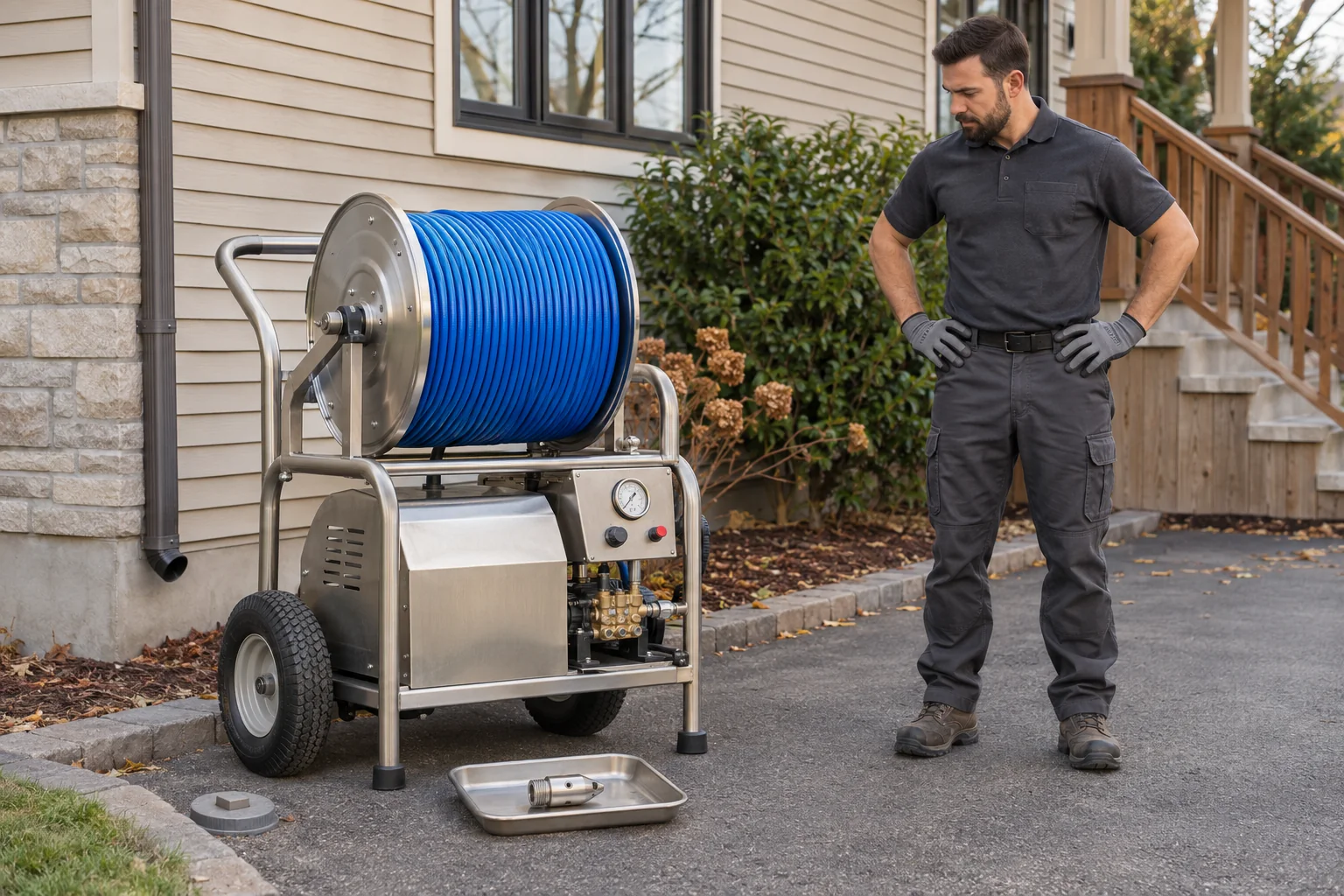
Recurring slow drainage, substantial deposits or a line whose walls remain coated after clearing can justify a closer look at cleaning options. Water travels through a hose and a suitable nozzle to help dislodge and carry away accessible material. The aim is to address buildup in the selected section while accounting for the pipe’s diameter, material and condition.
Grease and residue do not always form one isolated plug. They can gradually narrow the passage and catch other material. High pressure drain cleaning may be considered after an assessment of these conditions. A trapped object, crushed pipe or badly displaced joint raises different questions. More pressure cannot turn a structural defect into an ordinary maintenance issue.
Explain whether one sink drains slowly or several fixtures react together. A toilet that blocks on its own does not automatically call for cleaning the entire sewer line. The plumber first needs to identify the likely affected section and available access points. The proposed work should follow that assessment, rather than assume the most powerful method is always the best choice.
Different tools, different purposes
Opening a blockage, cleaning buildup and seeing the pipe
Mechanical clearing
A mechanical tool may open a passage or remove a localized obstruction. Depending on the cause, that may be enough. Our drain cleaning and unclogging service helps establish a suitable first approach without making high-pressure cleaning the default for every blocked fixture.
Hydro jetting
Jetting targets buildup in the section being treated. The nozzle, water flow and pressure need to suit the conditions encountered. This method does not repair cracks, and it cannot guarantee that roots or deposits will never return. A clear explanation of the intended result matters more than a pressure figure alone.
Camera inspection
A drain camera inspection helps examine visible surfaces and investigate recurring problems. It does not remove the blockage. Cleaning may be needed before useful images are possible; the order of work should reflect the actual condition of the drain.
Is wastewater backing up now?
Limit use of the affected fixtures and keep people away from sewage. Mention an active sewer backup immediately when calling. The current situation and the risk of further overflow need assessment before choosing a cleaning method or planning routine maintenance.
Know what the visit covers
What happens during sewer cleaning?
The scope depends on your installation. Before work begins, ask which line will be treated, why the method was selected and how the result will be checked. A targeted cleaning visit should have a clear purpose you can understand.
-
Review the symptoms
The plumber asks when the problem occurs, which fixtures are affected and what has already been attempted. Dates of earlier clearing visits and how long the improvement lasted are useful. Mention chemical drain cleaners and any known damage. These details guide the assessment but do not replace examining the installation on site.
-
Assess access and suitability
An accessible cleanout can make the work easier. A narrow, concealed or damaged opening can change the preparation required. The professional also considers the pipe’s condition and where the cleaning water can go. If another inspection or access point is needed, ask why and how it affects the proposed scope and cost.
-
Clean under controlled conditions
The equipment and approach are selected for the section involved. Occupants may need to stop using particular fixtures during the work. The plumber needs to monitor drainage and adjust the intervention. Unusual resistance or uncertainty about the pipe’s integrity can justify stopping to reassess rather than continuing to apply force.
-
Check and explain the next step
After cleaning, the professional checks drainage under accessible conditions and explains the findings. A camera check may be proposed for recurring trouble or suspected damage. Ask which section was treated and what remains uncertain. Improved flow alone is not proof that the line is watertight or free of every possible defect.
Protect the line
High pressure is not suitable for every pipe
A weakened or deformed pipe, or one with damaged joints, calls for caution. Age alone does not determine whether hydro jetting is suitable. Material, observable condition, previous repairs and access all matter. Ask how those factors affect the recommended approach and what could make the professional choose a different method.
Visible roots may be associated with an entry point that remains after the accessible roots are removed. Cleaning can restore a passage without correcting that defect. Removing material and solving the underlying pipe problem are separate objectives. Complete root removal and freedom from future blockages should never be assumed without assessing the specific line.
If the findings point toward a repair, its scope needs a separate discussion. Excavation is not automatic: the location and nature of the defect, access and available options need to be understood. If cleaning stops before completion, ask what prevented further work and what information is needed before you decide how to proceed.
What you can do safely
Avoid trying to jet a drain with a household pressure washer and improvised connections. Do not open a cleanout if backed-up water could escape. Do not mix drain cleaners or add another chemical product to prepare for the appointment. Tell the plumber exactly what has already been poured into the line.
Keep a safe route to the affected rooms. If water is approaching electrical equipment, stay clear and report the hazard when calling. Do not enter an enclosed or flooded space to find the cause. Accurate observations are more useful than a risky attempt to reach a hidden access point.
Homes and shared buildings
Plan around the occupants and the drainage system
For a house, explain where the known access point is and which fixtures are draining poorly. In a duplex or condominium, one branch may serve several occupants. Identify who can authorize the work, who can provide access and how residents will be notified before a temporary interruption. A symptom in one unit can involve a shared section of piping.
For commercial premises, describe opening hours, kitchen use and access locations. Cleaning the drains does not replace servicing grease separation equipment. Boucherville’s municipal sewer and wastewater guidance, available in French, specifically discusses maintenance obligations for grease traps and interceptors at affected businesses. Confirm the requirements that apply to your premises.
The same municipal source distinguishes private infrastructure from the City’s infrastructure. If the problem appears to involve the public system, contact the municipality about its process. Responsibilities and requested documents should be checked with the city where the building is located. Cleaning a private connection cannot be promised to resolve a municipal sewer overload.
Understand the proposal
What affects the cost of hydro jetting?
Cost depends on the section to be cleaned, pipe diameter, buildup, access and equipment required. Planned maintenance on an accessible line differs from a visit involving an active backup, multiple openings or an additional inspection. An unexpected obstacle can also affect the time and method needed.
Ask what the proposal includes: travel, diagnosis, cleaning, verification, camera work or documentation. Clarify when extra charges could arise and how you will approve an unforeseen step. Creating or repairing an access point is something to discuss before work proceeds, rather than discover as a surprise at the end.
A useful estimate starts with your situation. One fixed price cannot accurately describe every pipe and building. When calling, provide the symptoms, property type and previous work. On site, ask which observations support high-pressure cleaning instead of a simpler option. If the expected result is limited by damage or restricted access, that limit should be clear before you decide.
Prepare for the appointment
Clear the route to known access points without moving heavy loads or dismantling plumbing. Gather invoices, reports and videos you already have. Note the affected fixtures, how often blockages occur and any apparent connection with rainfall or simultaneous water use. These patterns help explain the problem without proving its cause.
Confirm who is authorized to make decisions and any building access restrictions. Mention tenants, business operations or scheduling constraints. A photo of a visible cleanout can help prepare the visit, but it cannot establish the condition inside the pipe. Do not force a corroded cap open to obtain a better photo.
After the cleaning
Ask which habits can limit buildup in your installation. In particular, keep grease and solid waste out of drains. Any maintenance interval should reflect actual use and findings; there is no universal schedule for every property. If symptoms return, record the date and affected fixtures so the cause can be reassessed using that history.
Choose an appropriate intervention
Let’s discuss the drain before choosing the pressure
Call Plomberie LaSalle at 514 312-3198 to explain the blockage, its history and the available access. We can clarify the request and confirm availability for your address in Montréal, the West Island, Laval or served sectors of the North Shore and South Shore.
Explore our plumbing services, visit the Plomberie LaSalle home page to prepare your request. The aim is to choose suitable cleaning and understand what should happen next.
Customer reviews