
Backwater valve installation and maintenance
A finished basement, a downstairs bathroom or a previous sewer backup makes it worth checking how your drainage is protected. Plomberie LaSalle assesses, installs and replaces backwater valves according to the building’s actual drainage layout.
We serve Montréal, the West Island, Laval, the North Shore and the South Shore within our service sectors. Call to confirm availability at your address and describe whether you need preventive work or help with an active problem.
Speak to a plumber · 514 312-3198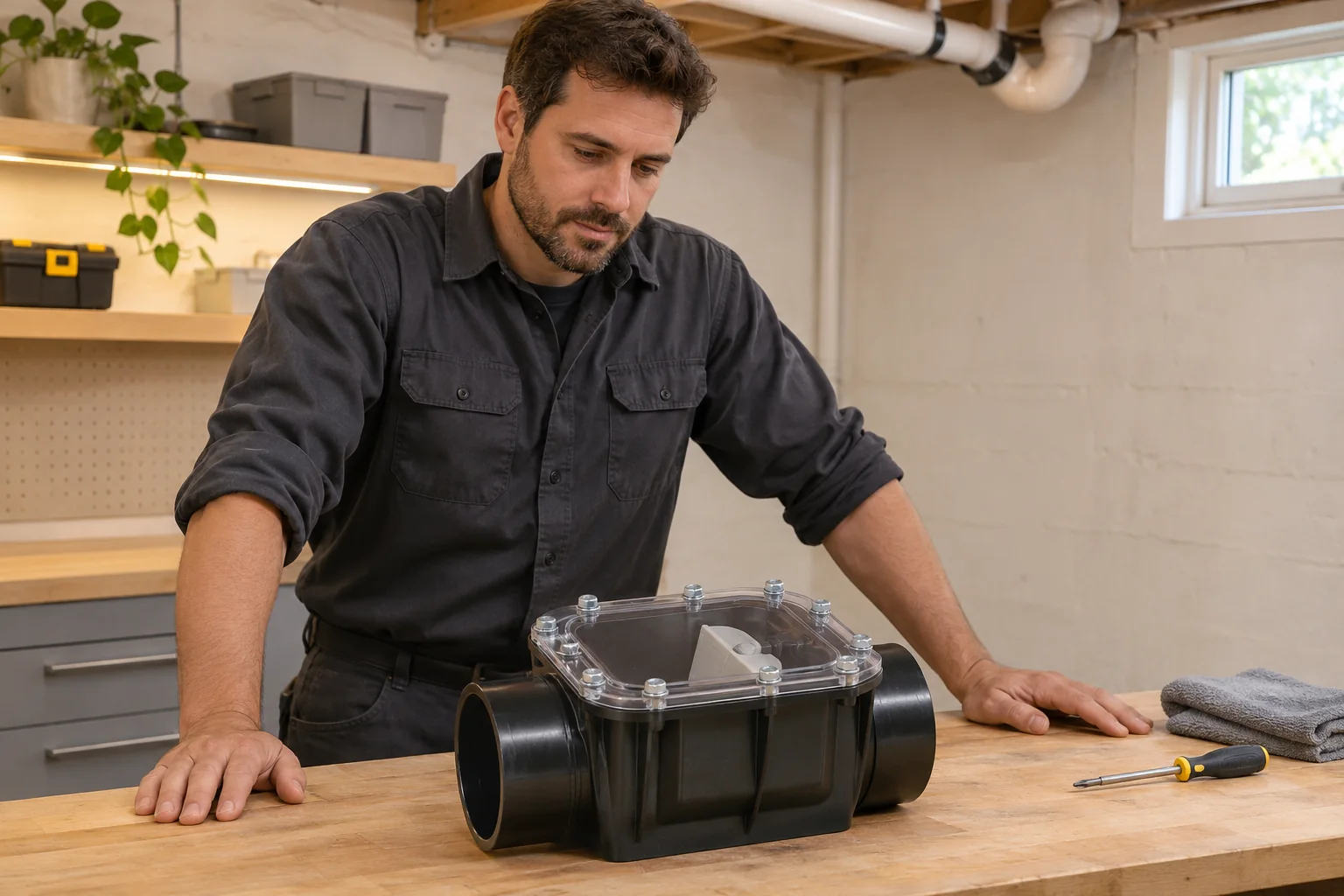
Protection that follows your wastewater piping
A backwater valve allows wastewater to flow in the intended direction and is designed to block reverse flow through the protected pipe. Its location matters as much as its condition. A fixture may remain exposed if its drain connection bypasses the protection. Finding a valve cover in the basement does not establish that every fixture is protected.
We start with the symptoms, the connected fixtures and the available access points. A gurgling floor drain, a valve that no longer moves and a backup during heavy rain require different checks. We explain the relevant work before recommending maintenance, replacement or a new installation. The objective is a suitable protection arrangement that can still be inspected after the work is finished.
Install, replace or maintain?
Backwater valve installation may be considered when suitable protection cannot be identified, when basement fixtures are added or when renovation work changes the connections. Selecting the valve type and location depends on the drainage layout, applicable requirements and the manufacturer’s instructions. The diameter of a visible pipe is only one part of that decision.
Replacement may be appropriate if the body is damaged, replacement parts are unavailable or an inspection shows that the mechanism can no longer perform its intended function. A damaged cover, deteriorated seals or restricted movement needs assessment. These findings do not automatically mean that the entire drainage system must be rebuilt.
Keep serviceable equipment working
Backwater valve maintenance addresses matters such as debris accumulation and the movement of accessible parts. A serviceable valve may mainly need appropriate cleaning followed by a functional check. That situation differs from an unsuitable location, a damaged body or a problem farther downstream in the sewer line.
Repeated backups may involve a blockage, a damaged pipe or a particular connection arrangement. A drain camera inspection may be recommended when it can answer a specific question. Replacing the valve without understanding the cause could leave the main problem unresolved. Tell us whether other fixtures or neighbouring units were affected during the same incident.
What happens during the work
01 · ASSESSUnderstand the building before opening the floor
We discuss when incidents happen, whether they coincide with rain and which fixtures are affected. We identify accessible valves, cleanouts and branch connections. Gather any available plans and explain previous plumbing work, even if you do not know every detail. In a duplex or condominium, identify shared drains and the person authorized to approve work.
The assessment establishes what needs protection and what remains uncertain. A pipe hidden beneath concrete may require further investigation. We explain those limits instead of presenting an assumed location as a confirmed fact. Photographs taken safely during a previous incident can help describe the sequence, but they do not replace inspecting the actual plumbing.
02 · PLANAgree on the scope and future access
The proposed scope should identify the plumbing work, the selected protection arrangement, the openings needed and the restoration included. We discuss periods when fixtures cannot be used and how to access the premises. Municipal requirements, permits and relevant documents must be checked for the address and the work being planned.
Maintenance access must remain practical after the basement is finished. A hatch beneath a fixed cabinet or a permanently attached floor covering makes future inspection difficult. Consider the final floor level and the clearance needed to service the valve before closing the area. If another contractor will restore the finishes, make sure everyone understands where access must remain.
03 · COMPLETEInstall, check and explain the equipment
Connections are completed according to the selected arrangement. The mechanism, joints and drainage are then checked under the conditions available on site. We show you the access point and explain the operating precautions. These checks do not reproduce every possible municipal sewer surcharge and do not guarantee protection against every form of flooding.
Before the visit ends, ask for the model details, maintenance guidance and documents specified for your project. Keep them with the invoice. They help with future service calls and with questions from your insurer or municipality. Confirm who will complete any remaining restoration and how the access will be preserved.
Maintenance you can continue after installation
Locate the access before a storm, while the drainage system is operating normally. Keep the area clear and identify the cover. Follow the manufacturer’s procedure. If the model is unknown, the cover will not open normally or you see damage, arrange professional service rather than dismantling unfamiliar parts.
The City of Montréal recommends checking valves ideally twice a year to ensure they operate without obstruction. The appropriate schedule also depends on the manufacturer and operating conditions. A check after a backup may be necessary even when routine maintenance was completed. The linked municipal guidance is in French.
Record service dates and observations such as recurring debris, worn parts, poor access or unusual odours. This is more useful than simply remembering that someone cleaned the valve. Avoid using chemical drain products to try to free a stuck mechanism, and tell the plumber about any products already poured into the drainage system. Do not attempt maintenance while sewage is backing up.
Understand the limits of the protection
When a valve closes against reverse flow, wastewater from protected fixtures may temporarily be unable to leave. Adding water to that part of the system can cause an indoor overflow. The precautions depend on the plumbing arrangement, so ask which fixtures should remain unused during a sewer surcharge.
A backwater valve does not remove water entering through a foundation crack, a window or the surrounding ground. A sump pump addresses different drainage needs. Our guide to backwater valves and sump pumps helps you prepare questions without replacing a building assessment.
A drinking-water backflow preventer is another type of equipment. It protects the potable supply and should not be confused with a wastewater backwater valve. Explain which system is involved when calling. This distinction helps route the request and avoids selecting a device intended for a different purpose.
What affects the cost of the work?
Access, pipe depth, the number of branches needing protection and the condition of existing connections affect the work. Servicing a valve through an existing hatch differs from installing one beneath a concrete slab. Protection of finishes, debris removal, concrete repairs and finished flooring should be clarified in the proposed scope.
Tell us whether you want an inspection, maintenance or a new installation. Provide the requested access information and explain whether tenants or business operations rely on the system. A site visit may be required before a dependable estimate can be prepared. A single price cannot accurately describe all building layouts or access conditions.
Check the requirements for your address
The RBQ explains protection requirements for sewer backups and links to technical guidance on permitted valve types and locations. Application must be determined for the building. A solution suitable for one house cannot automatically be transferred to another drainage arrangement. This technical reference is in French.
Municipal rules and financial assistance programs can differ. In Montréal, review official guidance before planning work that may qualify for assistance. Elsewhere, check with your municipality. Possible assistance does not establish eligibility or coverage of every expense. Confirm the conditions and application steps before starting, rather than assuming that an invoice alone will meet the program requirements.
Questions before booking
Buying a property or finishing a basement is a useful time to check existing protection. Do not cover an old access point before finding out what it serves. Renovations can change the connected fixtures and make an earlier arrangement unsuitable. In rental properties, coordinate access with occupants and keep clear instructions for backup conditions. For commercial premises, mention equipment that discharges water automatically so its operating constraints can be reviewed. This information supports a building-specific proposal instead of choosing a valve only by its appearance or retail price.
Why did I have a backup with a valve already installed?
The valve may be blocked, worn, poorly located or protecting only some fixtures. The source of water may also be different. We check the drainage path and incident conditions before deciding whether replacement will address the problem.
Will the entire floor need to be opened?
Not necessarily. It depends on the existing access and the appropriate connection location. We explain the anticipated openings, known limits and included restoration before proceeding. Ask specifically about finished flooring if that is part of your concern.
How should I prepare for the visit?
Clear safe access without handling sewage. Gather available invoices, plans, safely taken photographs and the building manager’s contact information. Identify which fixtures overflowed, when the incident happened and whether it followed heavy rain or routine indoor water use.
Do you serve my area?
We receive requests for Montréal, the West Island, Laval, the North Shore and the South Shore within our service sectors. Availability, travel arrangements and timing are confirmed according to the address and actual urgency. Call with your location before planning access or taking time away from work.
What our customers say
Check your protection before another incident
Tell us about the building, the access points and the problem you observed. Plomberie LaSalle will help identify the next step: maintenance, assessment, backwater valve installation or replacement.
Call 514 312-3198Explore our plumbing services, contact us or visit Plomberie LaSalle.
9286-5419 Québec inc. · RBQ 5688-9025-01