After the visit
Reduce the pipe’s exposure to cold
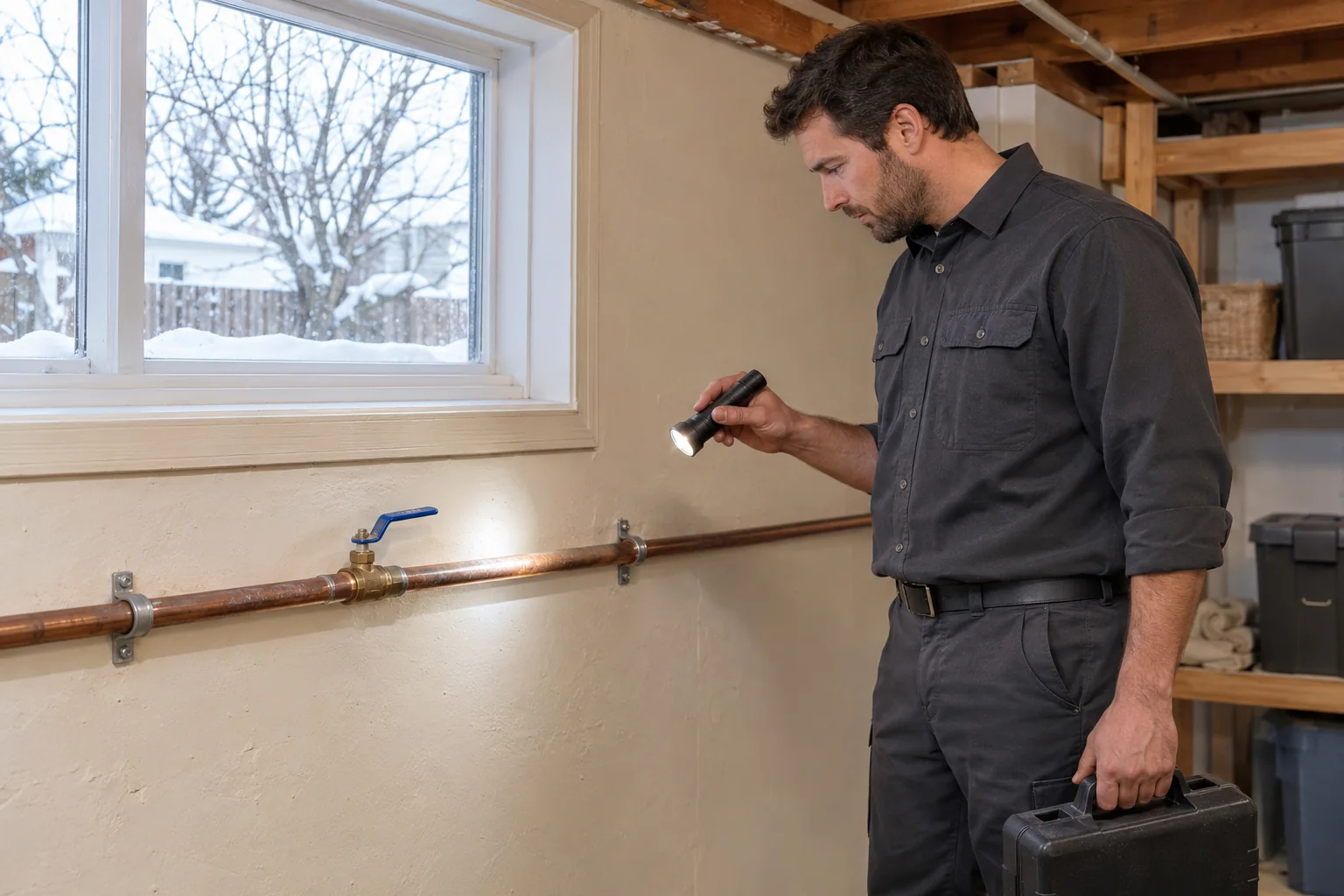
Ask which sections were affected and what may explain their cooling. Keep shutoffs accessible and have vulnerable pipe routes assessed. Corrective work needs to consider heating and air circulation, the building envelope and nearby installations. Avoid closing a damp cavity before its condition has been evaluated. Water damage can remain after the damaged pipe has been repaired.
Before a winter absence, arrange property checks and confirm any relevant requirements directly with your insurer. Prevention needs to suit the building and its equipment. An alert system can identify a change, but it does not replace someone able to respond when heat fails or water starts escaping. Keep the contact and access arrangements practical for the person checking the property.
Questions about frozen and burst pipes
Water is flowing again. Should I keep the appointment?
Explain the change before cancelling. A distorted pipe, new moisture or repeated freezing still warrants assessment. Restored flow does not prove that concealed lengths are intact. Report any leak that appears during warmer weather, including a small drip that was absent while the water was blocked.
Should I open the wall before the visit?
Not automatically. An opening should follow the available clues and useful access. Explain the known pipe route and affected surfaces. Do not open an area near electrical installations or beneath a damaged ceiling simply to search for the pipe. Unnecessary access can add work without identifying the fault.
Does thawing include repair and finishing?
Confirm each task. Thawing aims to restore circulation; a split pipe needs additional repair. Drying, finishing materials and painting may involve separate work. Clarify those boundaries before the intervention so you understand what will be restored and what still needs to be arranged afterward.